
The fundamental impact of AI on user information behavior was evident at the fourth meetup of the AI for Media Network. Canadian AI expert Nikita Roy advises media organizations to become providers of structured information in real-time. Additionally, practical AI use cases in video and image production were showcased.
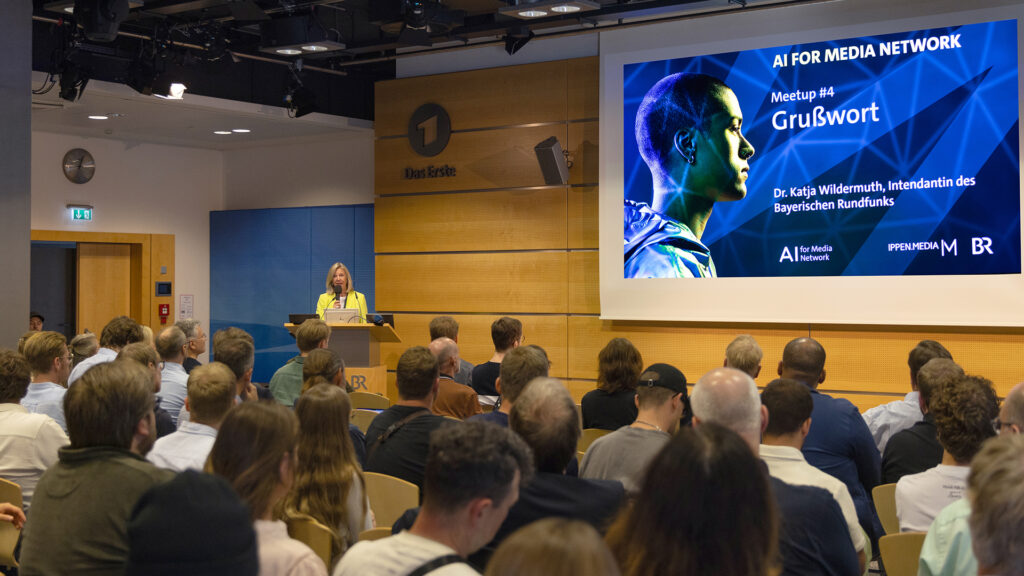
On July 10th, the AI for Media Network convened for its fourth meetup, focusing on video and image production with AI. The event was held at the event hall at BR headquarters, packed with 110 attendees. BR Director Dr. Katja Wildermuth opened the event with a welcoming speech.
Wildermuth: Media Should Cooperate Rather Than Compete in AI
She advocated for a robust AI ecosystem where media organizations cooperate instead of competing. “In the AI era, BR and ARD are just one player among many others. It is crucial to prioritize partnerships. The AI for Media Network is a key component in this strategy.”
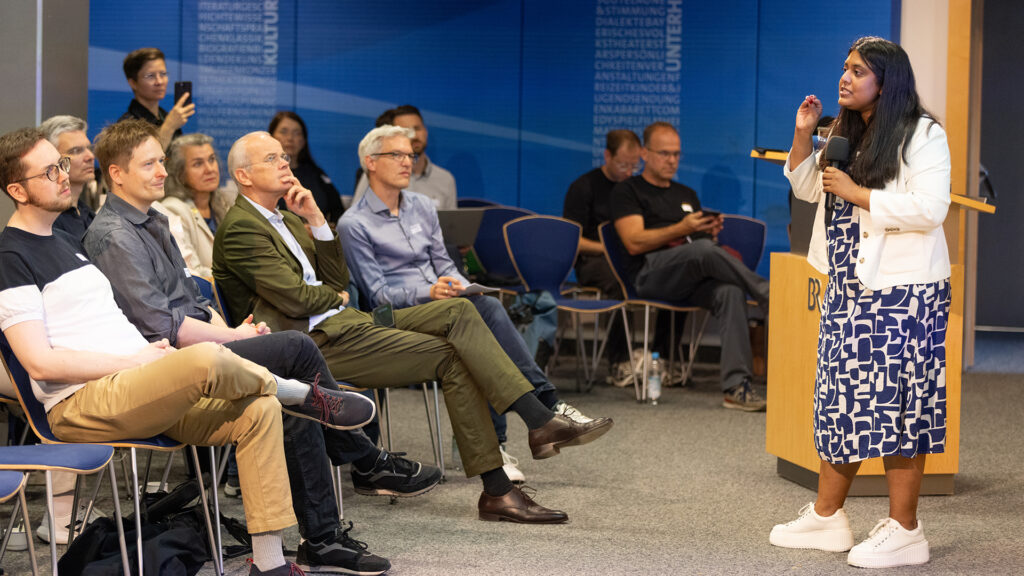
AI Expert Roy: Users Want to Engage with News
The keynote by Canadian AI expert Nikita Roy, host of the podcast Newsroom Robots, was well-received. Roy emphasized that users no longer want to simply read and click on news; they want to interact with it. For instance, users might specify their interests via voice input and choose how they want to consume content, whether as text, video, or audio. Media organizations need to adapt their user interfaces and structure their content accordingly. Roy asserted that the new journalism ethos should be: “We are are real-time structured knowledge service.”
Pipeline for Automated Video Editing
Following the keynote, four use cases for AI in video and image production were presented. Jörg Pfeiffer from BR’s AI + Automation Lab demonstrated “SchnittmAIster,” an AI-powered pipeline that facilitates automated video editing. Google’s LLM Gemini 2.5 Pro analyzes video material and provides editing suggestions. An XML file is generated, containing the necessary edits and all video metadata. This edit list can be opened in Adobe Premiere, where the editorial team can make final adjustments if needed. Additionally, an AI creates a voice-over for the video. This project had already won the AI for Media Hackathon in May, and the workflow is now being refined, focusing on news video production.
Klaus Kranewitter and Marcus Mueller from the film production company Enrico Palazzo showcased various applications where they use AI to create synthetic images or videos. These include replacing stock photos or creating videos about historical events for their format „Geschichtsgulasch“, part of ARD and ZDF content-network Funk. Image generation often works well with Open Source tools like ComfyUI, while cloud-based LLMs like Sora, Veo, or Hailuo are more suitable for video production.
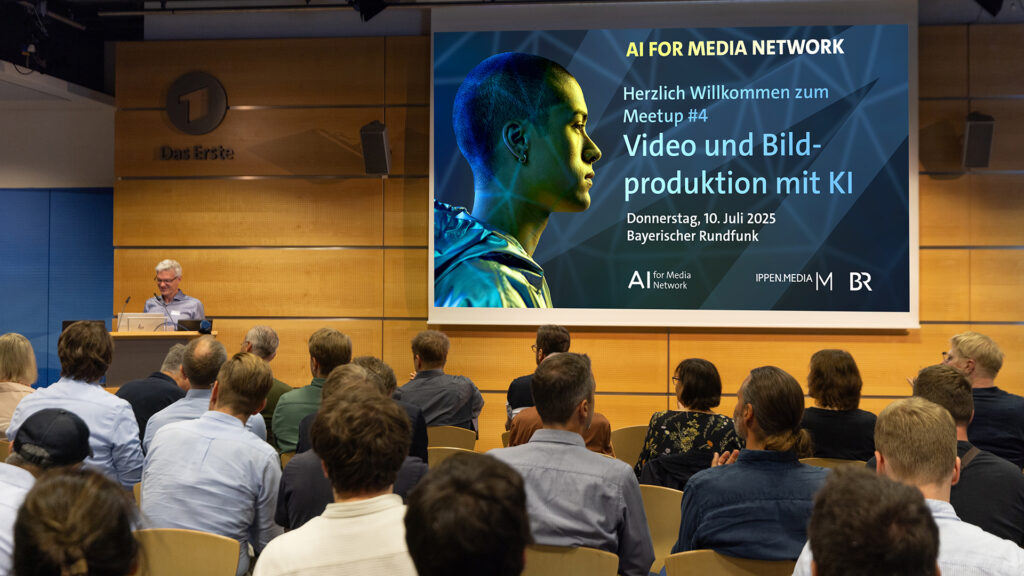
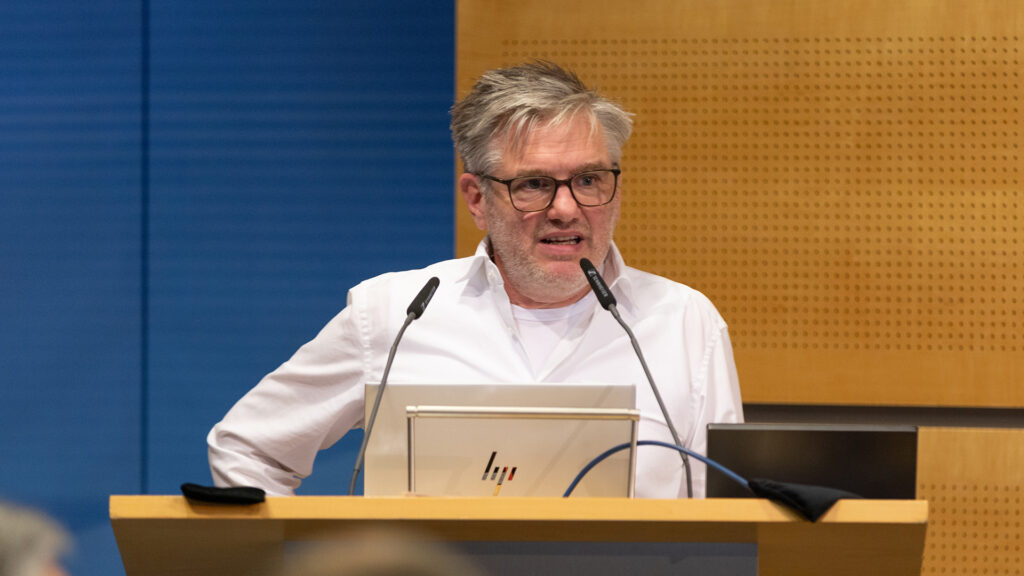
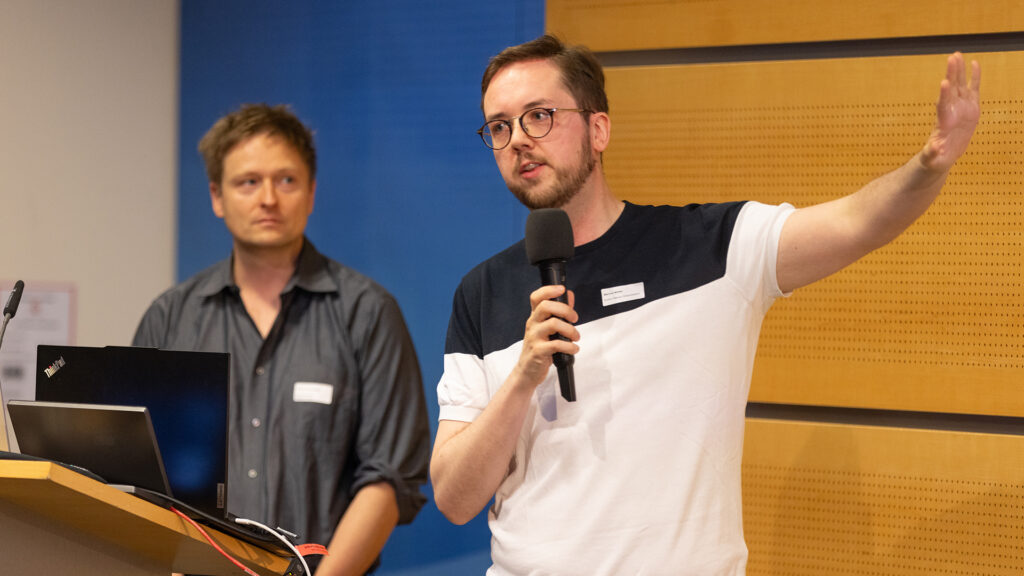
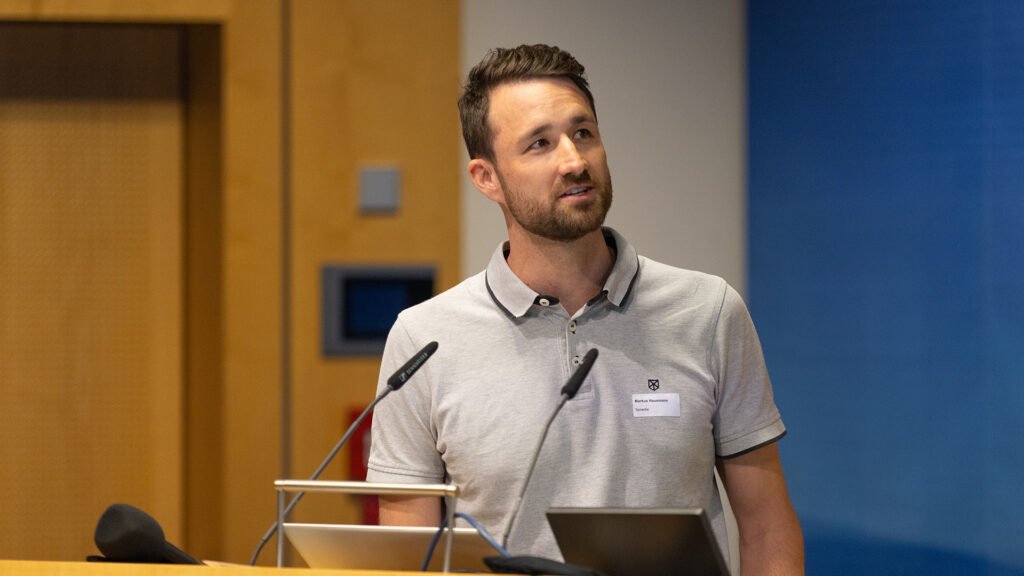
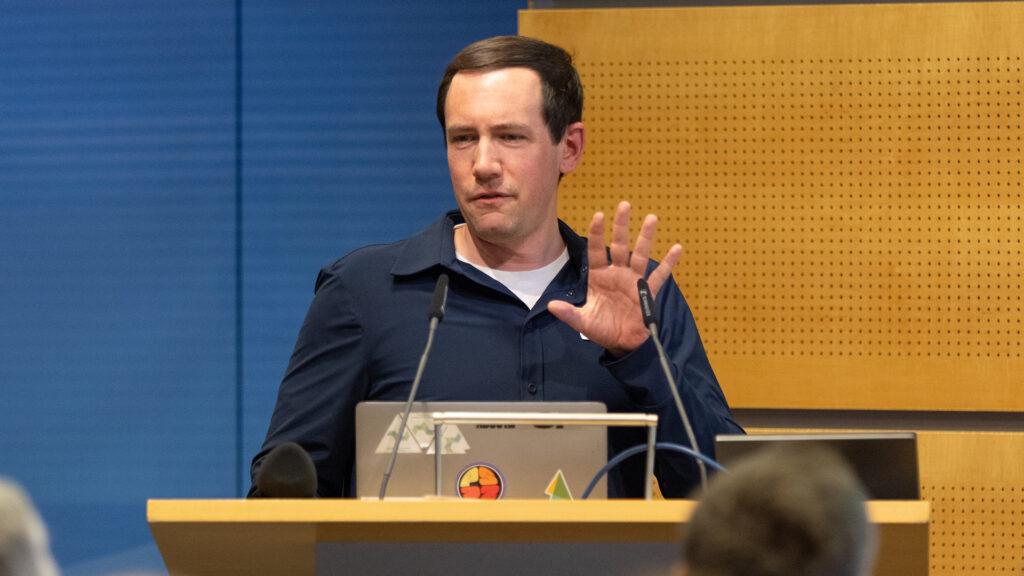
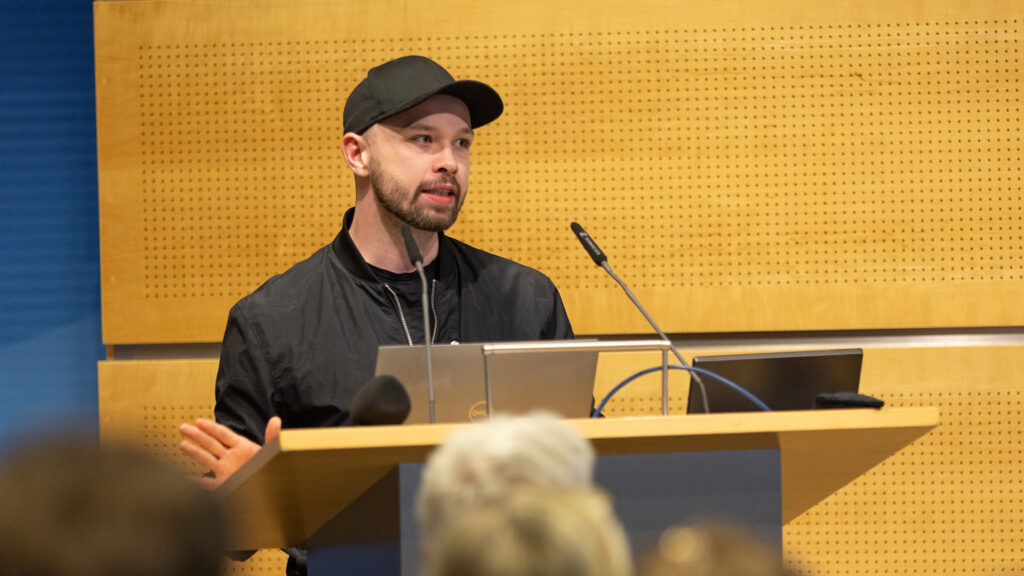
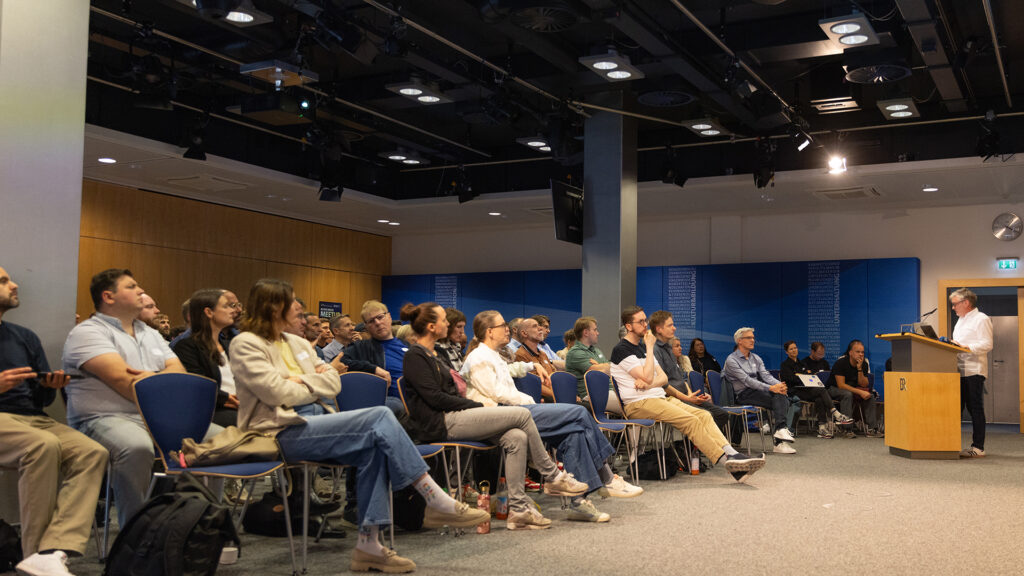
Impressions from the 4th AI for Media Meetup. All photos: BR/Markus Konvalin
Creating Videos in Different Languages
Markus Hausmann from Tamedia was the first Swiss speaker welcomed by the AI for Media Network. Hausmann demonstrated how Tamedia translates videos originally spoken in Swiss German into French using Hey Gen, cloning the speaker’s voice.
Jan Georg Plavec presented the workflow used by the Stuttgarter Zeitung to generate AI-created symbolic images for various sections of their service-oriented offering, StZ Extra, in a consistent style. Once the text is completed, the editorial team brainstorms ideas for the illustrations. Using ChatGPT, a prompt for Midjourney is created, and the image AI generates images that are then refined by the Stuttgarter Zeitung’s designers.
Felix Rieger concluded the event by introducing the recently launched AI Competence Center Media (KI.M) by Medien Bayern GmbH. He focused on the so-called “KI-Reallabor”, where Bavarian media can conduct a free AI proof of concept. As an example, Rieger showcased the radio chatbot from Antenne Bayern, which transcribes the radio program almost in real-time. Using a chatbot based on a RAG system with radio transcripts, listeners can directly ask questions about the program.
Members of the AI for Media Network can find the recording and all presentations on this password-protected webpage.
Next Meetup on September 25 at WDR in Cologne
The next AI for Media Network meetup will be held on September 25 at WDR in Cologne, focusing on how media can use AI systems to make their content more accessible to users. To stay informed about all news and events from the AI for Media Network, you can sign up for the email newsletter here.